Child car seat
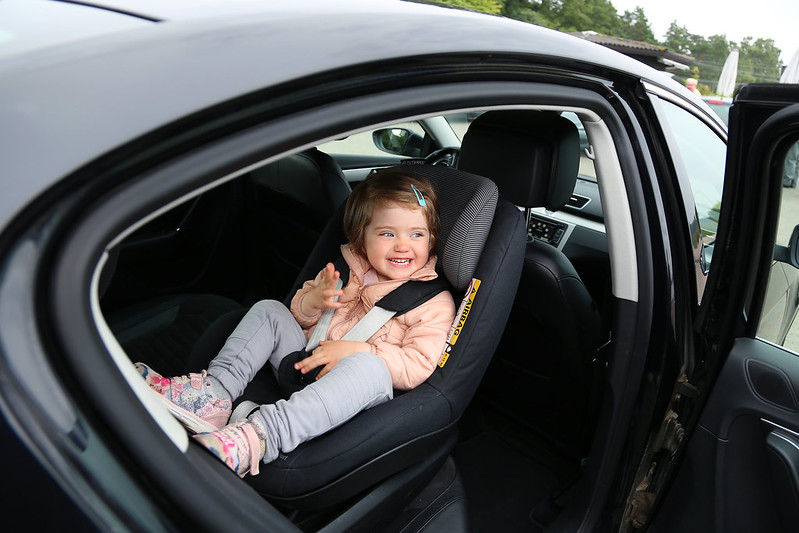
A child travels most safely in a rear-facing car seat until they reach a height of 125 cm. It is advisable to use an appropriate car seat until the child is 150 cm tall. The recommended position for the child in the car is in a car seat on the back seat.
In Finland the law requires that a child under 135 cm in height and who is traveling in a passenger car, van, or lorry must use a child restraint system if the vehicle is equipped with seat belts or another approved installation method.
Liikenneturva recommends that a child use an appropriate restraint system until reaching a height of 150 cm and a rear-facing car seat until reaching a height of 125 cm.
Choose the right child car seat
Child restraints are categorised according to the weight of the children they are suitable for. When selecting a child seat, observe the weight and length limits of seat in question. When the limits are reached, change the seat in to a bigger one. The rear seat is the safest place for the child.
It is vital that the child car seat is fitted correctly in the car. Only a properly fitted child restraint system keeps the child safe in their seat in case of an accident. Fit it or have the child car seat fitted correctly in your vehicle and ensure that it remains securely fitted and suitable for your growing child. The child seat manufacturer’s website shows which car models the seat is compatible with. If possible, the seat should also be fitted with the child.
Remember that the child seat must be attached to the vehicle even when empty. A loose child seat is a risk factor in accidents.
Always read the instruction manual before using the child seat.
An appropriate child restraint is one which:
- has the E-approval which ensures your child car seat meets the standards. E-approval is mandatory for all child restraint systems in the European and Scandinavian market.
- is suitable for your child’s weight and height.
- fits to the car where it is mainly used and is correctly fitted to the car according to the manufacturer’s instructions.
A baby seat for babies
A baby seat is meant for babies. Before installing the seat to your car, adjust the seat belts to fit your baby. The belts should be firmly attached, but so that your baby enjoys being in the carrier.
Check the manual of the baby seat for the intended size and age of the child. When either the weight or the length limit is reached, change to a rear-facing child seat.
Don’t place a rear-facing child car seat in the front seat where there is an airbag. A deploying airbag in front of a rear-facing child car seat can cause serious injury or even death if there is a collision.
A child travels most safely facing the rear
A child travels most safely in a rear-facing car seat up to a height of 125 cm. An average-sized child can usually travel rear-facing until the age of 7, and a small-sized child even up to the age of 9. In addition to the height limit, consider the car seat’s weight limit: seats approved for use up to 125 cm are available with either seat-belt installation (maximum weight limits between 32–36 kg) or ISOFIX installation (maximum weight limits between 21.5–23 kg).
The average weight of a one-year-old’s head is 25 percent of the total body weight. The average weight of an adult’s head is 6 % of the total body weight. So the child’s head is larger in relation to the body than that of an adult. Besides the relatively heavy head a child has a delicate neck. In the event of a collision rear-facing seats provide the best support.
Take note that bent legs are not enough of a reason to turn the child seat facing forward too early.
For toddlers, the Finnish Road Safety Council recommends a child seat that has passed the Plus Test. Plus Test is a voluntary supplementary test to the E-approval that manufacturers may choose to test their car seats for. The Plus Test has been developed in Sweden (Opens in a new window)in a collaboration between VTI, NTF (National Society for Road Safety), Folksam, SIS (Swedish Standards Institute), Volvo, and representatives of CRS manufacturers.
The requirements in the Plus Test are extremely difficult. For instance the Plus Test has a much lower limit for the maximum strain on the neck than other child car seat tests. This means that Plus Test approved child seats are the safest. Only rear facing child car seats have passed the test.
Combination seat until the child is 150 cm tall
With the combination seat, the car seat belt is positioned at the correct height for the child and also protects the sides in the event of an accident.
The lower part of the seat belt should pass over the pelvis. Tighten the lap belt to fit and check that the shoulder belt passes over the shoulder. The shoulder belt must not be placed under the arm or behind the back. Adjust the headrest to the height of the child’s head so that the seat belt is positioned at the correct height
The law also allows the use of a booster cushion, which is backless booster seat. When the booster cushion is used, the seat belt is positioned correctly, but the cushion does not protect the child in any way in the event of a collision. The booster cushion should be used with the vehicle’s own head rest and 3-point seat belt.
When the child is over 150 cm tall, they can wear the seat belt as an adult. The example of parents is important when wearing a seat belt: children use a seat belt if the parents use it.
Used child seat
If you are purchasing a used seat, you must know its history. For example, the seat can be circulated from an older sibling to a younger one within the family if the seat is intact.
Child seats get old. On average, the seat and the platform should be replaced after seven years. The maximum service life of the seats varies. The dealer or importer will have information about your specific child seat. The year and week of manufacture of the seat can be found on its trunk.
If you buy a seat over the internet, you must be careful. For example, find out whether the seat is approved in the EU and whether it fits your car. In particular, the fixing systems for seats sold in foreign online shops may be very different and the quality of the seats may vary greatly.
Child seat in a collision
It is recommended that the child seat be removed from use when it has been under heavy strain or is otherwise damaged or defective. For example, it is recommended to replace the seat after a collision. It is also recommended that the platform be replaced after a collision, as there may also be invisible damage to it in the event of a collision.
Refer to the seat manufacturer’s manual for instructions in case of a collision. Also check your insurance company’s compensation policy for your child seat.
What if the child seat cannot be fastened?
Children under three years of age cannot be transported in a car, van or truck to which an approved child seat cannot be attached. In a bus or coach, the child must wear a seat belt or restraint.
The child must not be carried on the lap in a passenger car, van or truck.